Our
Fertile Ground is
helping solve the challenges facing youth by providing supportive community
environments where children can thrive. The non-profit organization uses a peer
support model in which trained teen counselors provide education and social
support to children and adolescents living with chronic and life-threatening
illnesses.
The residential
and day camps are supported and staffed by volunteer medical and nursing
professionals. Teen counselors are trained by professionals to offer education
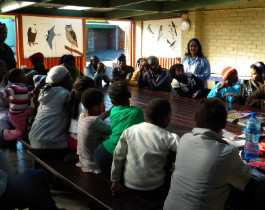
and support through informal, fun activities. The residential and day camp
programs offer a unique opportunity for participants to interact in a relaxed
and supportive atmosphere that fosters understanding, acceptance of their
condition, and proper emotional development. Camp participants include children
and adolescents living with chronic and life-threatening illness, as well as
those affected but yet not living with illness. This promotes normalizing
illness, contributing to improved understanding and removing stigma.
Participants share their knowledge, experience, and concerns as well as
participate in educational sessions and recreational camping activities.
Camp Program
Themes
Significant
themes of the residential and day camp programs are:
To enable
participants to meet others with others who are similarly affected.
To provide an
enjoyable camp experience where everyone is accepted without judgment.
To offer
parents a break from the daily worries of raising a child living with a chronic
or life-threatening illness.
To foster more
independence by providing information about the importance of maintaining daily
medication schedules.
To teach
participants that living with illness is not a restrictive lifestyle.
To have fun and
make new friends.
To enable
children to interact with their healthcare providers in a non-clinical setting.
To provide
opportunities for participants to be part of a cross-cultural camp community.
Addressing
the HIV/AIDS Pandemic
Funds are
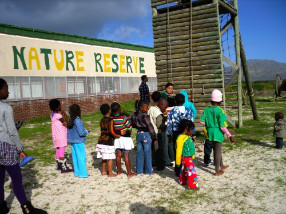
raised to sponsor HIV-infected teens and volunteer counselors to travel to Cape
Town, South Africa to participate in a residential camp for those infected and
affected with HIV. This combined USA-SA camp provides an ideal opportunity for
cultural and practical exchange around living with HIV. In the United States,
especially in the San Francisco Bay Area and Northern California, many of the
challenges which face youths and families in South Africa have been overcome.
They share their experiences with taking antiretroviral (ARV) medication, which
just recently has become available to people in South Africa, the benefits and
the side-effects. For American youth the exchange is equally important. There
is a much higher rate of adherence to HIV medication among South African youth
than there are among young Americans infected with HIV. South African youth
have the opportunity to share their experiences and continued motivation for
taking their medication under severe, and often life threatening circumstances.
Two six-day
camps per year are scheduled in Cape Town; the first in July and the second in
December. In order to strengthen and maintain the support network established
at the camps, at the conclusion of the camps, communication among camp members
and between Americans and South Africans is strongly encouraged, via telephone,
e-mail, regular mail, and for those who remain in the area, outings and
get-together's.
Family
Support
The parents and
caregivers of children and adolescents who are ill are often themselves in need
of nurturing and care. For this reason the camp programs are open to parents,
siblings and caretakers where they too can enjoy a fun, relaxing and
educational experience. Psychosocial support and information sessions are
facilitated by trained professionals who are able to spend extended periods
with parents, caregivers and siblings in an informal environment.
Fundraising
Activities (2008-2009)
To accommodate
the increasing needs of children living with chronic and life-threatening
illness, we are currently conducting a fundraising campaign to expand into the
comprehensive healthcare support center that will include a permanent site for
the camp. This will mean that would offer year-round, nearly one third of the
operating budget for each camp goes to renting the facility. We have currently
identified a site which is fairly well isolated, aesthetically beautiful, and
close to Cape Town. The cost of this site Klein Water Fall Farm 4.2 acres is 1.5 million for farmland property.
Teens, their
parents or caregivers will be engaged in the process of building the camp site
with the assistance of volunteer artisans and educators, plumbers and electricians,
both from South Africa and the United States. Additional material and
transportation costs will be budgeted after the purchase of the land and plans
for the building and surrounding area are complete.
The
Reach One, Touch One fundraising project is organized around The Star Thrower theme.
The counselors
and camp participants are raising funds for the long-term sustainability of the
camp by selling key chains, cards and lapel pins. We believe that by involving
the volunteers and beneficiaries of the camp programs builds self-confidence,
self-esteem and self-efficacy. Even though most South African youth live in
situations of poverty, they are not comfortable with being dependent on
handouts. They are enthusiastic fundraiser's and have big dreams for Our
Fertile Ground.
The Star
Thrower
As the old
man walked along the beach.
At dawn, he
noticed a young man ahead
of him
picking up starfish and flinging
them into
the sea. Finally catching up
with him, he
asked why he was doing this.
The young
man answered that the
stranded
starfish would die if left
until the
morning sun.
But the
beach goes on for miles
and there
are millions of starfish,
countered
the old man. How can
your effort
make a difference?
The young
man looked at the starfish
in his hand
and threw it to safety in the waves.
It made a
difference to that one, he said.
- Loren
Eiseley, adapted by Joel Barker